Anyone considering a battery storage system for their own business today cannot overlook China. The largest and commercially most attractive manufacturers of Battery Energy Storage Systems (BESS) are based in Asia. The real challenge for Western companies is no longer the technology itself, but the process: selecting the right manufacturer, ensuring compliance, and legally securing the import into Europe.
At Kaiserberg, we navigate this path every single day. We import battery storage systems from Asia and already have established relationships with reliable manufacturers. In this article, we outline what really matters when importing.
Why China Sets the Pace in Battery Storage
The market for battery storage systems has exploded globally. For European businesses, this means the widest selection, the most advanced LiFePO4 technology, and the best pricing are found in Asia.
Global Market Dynamics: Worldwide BESS shipments reached approximately 315 GWh (an increase of nearly 50% year-on-year). Concurrently, system prices dropped by around 31% to about 117 USD per kWh.
Six of the top ten battery manufacturers globally are based in China, led by CATL and BYD. Other notable players in the commercial and utility-scale market include Hithium, Envision, Pylontech, and Sungrow. However, simply ordering from the first available supplier risks sub-standard quality, missing documentation, and, in the worst-case scenario, equipment that cannot legally be operated in your country.
The Real Hurdle: Compliance and Importer Obligations
Battery storage systems are not standard import commodities. The EU Battery Regulation (Regulation (EU) 2023/1542) establishes a unified framework for the sustainability and safety of batteries, explicitly including stationary energy storage systems. In Germany, this is enforced alongside the Battery Right Implementation Act (BattDG).
As an importer bringing a battery from a third country into the EU market, you assume strict legal responsibilities. If the storage system is sold under your own brand, you may even take on full manufacturer obligations. These include:
| • CE Marking | Required before import |
| • Mandatory Battery Labeling | Compulsory |
| • Carbon Footprint Declaration | Verifiable proof required |
| • Digital Battery Passport | Mandatory prospective requirement |
Logistics: Battery Storage is Dangerous Goods
Strict international regulations apply to transport. A containerized battery storage system is classified as Class 9 Dangerous Goods under UN Number 3536. Documentation requirements for these shipments remain highly stringent. Packaging, labeling, dangerous goods declarations, and the choice of carrier must be flawless from day one to avoid expensive port delays or shipment rejection.
How Kaiserberg Manages Your Import Process
We address these critical areas – sourcing, compliance, and logistics – to manage the entire process seamlessly from a single source:
- Sourcing & Supplier Selection: We know the market and help you select the ideal manufacturer tailored to your required capacity, budget, and quality standards.
- Quality Control: We conduct on-site inspections in Asia before the goods are shipped, preventing unwelcome surprises upon arrival.
- Compliance Verification: We ensure that the storage system completely satisfies the criteria of the EU Battery Regulation and national laws.
- Customs & Logistics: We handle full customs clearance and organize the specialized dangerous goods transport according to UN3536 protocols.
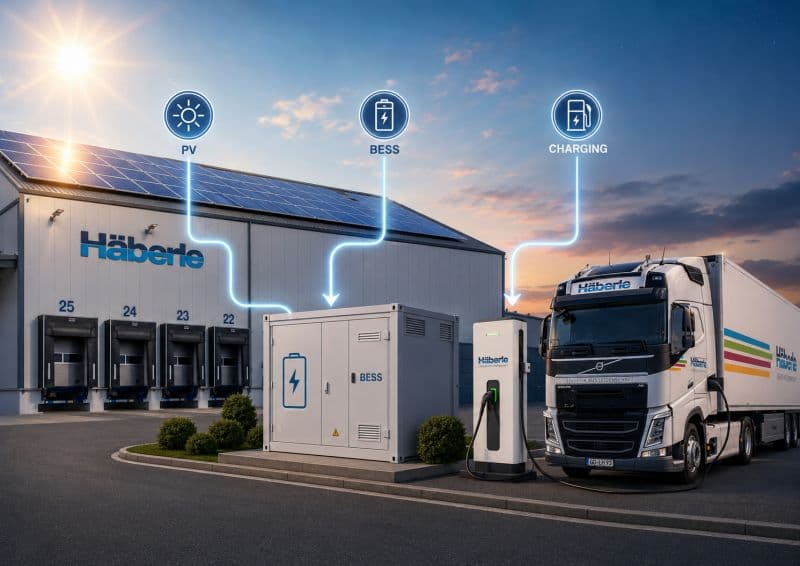
We speak from practical experience: at our own commercial facility, we operate five truck charging stations coupled with a large-scale solar array. We understand the hands-on realities of charging infrastructure and commercial storage because we designed and built it ourselves.
Conclusion
Importing battery storage from China offers significant economic and technological advantages for commercial enterprises. The risks do not lie within the product itself, but rather in the process. Navigating manufacturer selection, EU compliance, and dangerous goods logistics correctly allows you to leverage maximum price benefits without legal risk.
Planning to invest in a commercial battery storage system?Do not leave your import logistics to chance. Use our
Inquiry Form – we will provide a non-binding freight quotation within 24 hours and transport your storage system safely and compliantly.