The customs tariff number – also known as the HS code, commodity code, or TARIC code – is used for the clear classification of products in international trade.
Among other things, it determines:
-
The level of import duties
-
Possible anti-dumping measures
-
Import restrictions
-
Statistical reporting
-
Required documentation and inspections
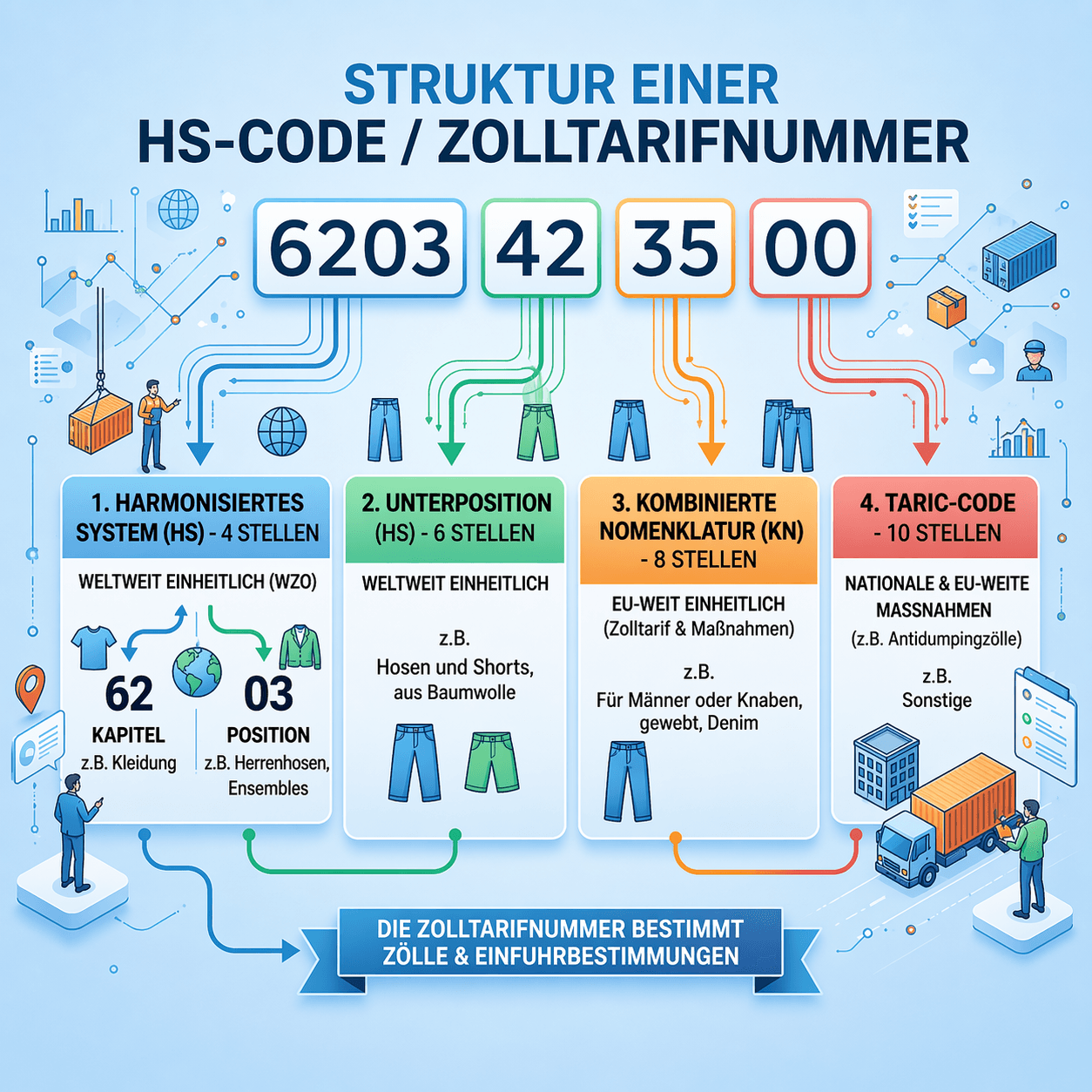
For a classic men's jeans made of cotton denim, the following code may be relevant, for example:
6203 42 35 00
The structure behind it follows a logical system:
First four digits: Product group
6203 refers to clothing and trousers for men or boys.
Digits five and six: Material
42 indicates cotton.
Digits seven and eight: EU product specification
This is where denim fabric, for example, is classified in more detail.
Final digits: TARIC subdivision
This section may include additional measures such as special duties or import regulations.
Even a single incorrect digit can shift the product into a different category.
Example:
If a high synthetic fiber content is declared instead of cotton, the tariff classification changes. As a result, different duty rates may apply or additional inspections may be required.
Possible consequences:
- Duties paid too high or too low
- Additional claims by authorities
- Delays during import
- Fines
- Goods blocked at the port or warehouse
Especially for growing brands and medium-sized businesses, such mistakes are costly and avoidable.
Correct classification requires product knowledge, material expertise, and experience with customs systems. Anyone who guesses or simply adopts what a supplier provides is taking unnecessary risks.
We support our clients throughout the entire supply chain:
- Supplier sourcing in Asia
- Product inspection
- Correct documentation
- Import processing
- Logistics to the final destination
This ensures that procurement is not only cost-effective, but also secure and reliable.
The customs tariff number is far more than a formality. It determines costs, speed, and legal certainty when importing. Those who handle it correctly save time, money, and avoid unnecessary stress.