Importing from China: Process, Customs Clearance, Importer Obligations, and Costs
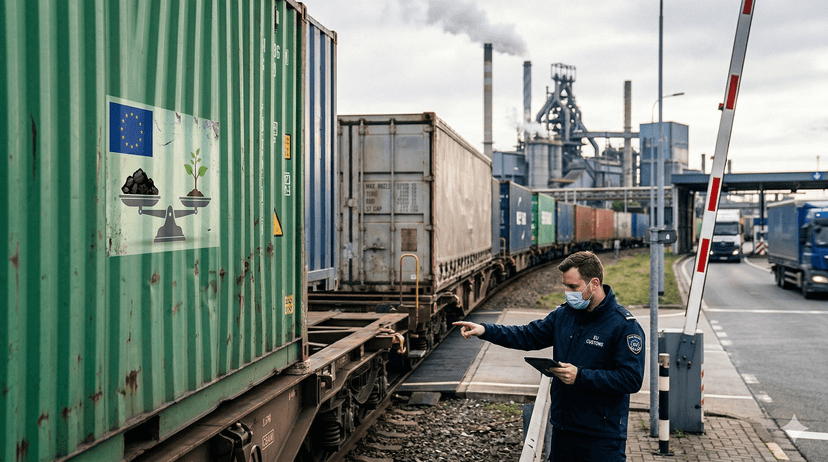
Anyone looking to import goods from China or other non-EU countries quickly comes across the same key questions: How does the import process actually work? How is customs clearance handled? What obligations does an importer have in Germany or the EU? And what real costs need to be calculated? These questions determine whether an import project can be implemented cleanly, profitably, and legally. In principle, all goods imported into the EU from a non-EU country must go through customs clearance. Once they have been properly imported and all requirements have been met, they can circulate freely within the EU internal market.
Many companies underestimate the fact that importing is not just about finding a supplier and arranging transport. In practice, several layers are closely connected: product requirements, documentation, customs formalities, tax implications, labeling, safety, liability, and internal processes. Especially when importing products from China, the purchase price alone is not decisive. What matters is the entire import process, all the way to legally placing the product on the market in Germany or the EU. Depending on the product category, product requirements, CE conformity, labeling, packaging, and sector-specific additional rules must be checked carefully.
This guide explains the full process in a way that reflects real business questions. It is aimed at retailers, brands, Amazon sellers, importers, and purchasing managers who want to understand how a professional import process is structured and where the typical risks lie.
How Does Importing from China Work?
Importing from China does not begin with shipping, but with preparation. The first step is always to clarify whether the desired product may actually be imported into the EU and marketed in Germany. Depending on the product category, technical, safety-related, health-related, or labeling requirements may apply. Many product categories are subject to specific EU regulations. For certain goods, CE marking is also required. This indicates that a product complies with the relevant safety, health, and environmental protection requirements necessary for placing it on the market within the EEA.
Only once regulatory feasibility has been clarified does the operational sourcing process begin. This includes supplier selection, sampling, price negotiations, defining specifications, packaging requirements, scheduling, and agreeing on commercial terms. Many later problems originate in this phase: incomplete specifications, missing tests, unclear material definitions, or vague agreements on product quality. Companies that work imprecisely at this stage risk differences between samples and mass production, as well as later issues with customs, product safety, or marketability.
After supplier selection and production approval, export and shipping preparation begins. For later customs clearance, documents such as the commercial invoice, transport documents, packing list, and, depending on the product and origin structure, additional documents or certificates are usually required. Access2Markets specifically mentions the commercial invoice, transport documents, proof of origin, and, where applicable, import licenses or further evidence as relevant documents for customs clearance.
The actual cross-border movement of goods then begins. The goods are loaded, transported, and declared at the first relevant EU customs office. It is important to understand that importation does not automatically mean that the goods can immediately be used or sold freely. Only once the goods have been released for free circulation, all import requirements have been fulfilled, and the applicable duties and taxes have been paid are they legally transferred into the EU economic area. This procedure is the basis for allowing the goods to circulate within the EU internal market without further customs controls.
In practice, a professional import process usually follows this structure: check the product, define the requirements, select the supplier, finalize the specifications, prepare the documents, organize shipping, submit the customs declaration, pay the duties and taxes, release the goods, and only then transfer them into sales, storage, or fulfillment. Companies that plan this process properly significantly reduce delays, complaints, and additional costs.
How Does Customs Clearance Work When Importing?
Customs clearance is the legal and operational process through which goods from a non-EU country are imported into the EU. For companies, the EORI number is essential. It serves as an identification number in customs procedures. According to the European Commission, economic operators established in the customs territory of the Union need an EORI number for customs purposes, for example when submitting a customs declaration. German customs also points out that applying for an EORI number is free of charge.
During the actual import process, the goods are declared to customs. Access2Markets explains that EU countries use a common import declaration form, the Single Administrative Document, or SAD. Once the customs declaration is accepted, the relevant point in time for calculating import duties and taxes is established. These charges may include customs duties, import VAT, and, depending on the goods, additional excise duties.
It is also important to understand that not every shipment is treated in the same way. The exact customs clearance process depends on factors such as the commodity code, goods value, product type, transport route, document status, and possible restrictions. Certain product groups require additional permits, certificates, or supporting documents. This applies, for example, to sensitive areas such as food, animal products, chemicals, biocides, or other regulated goods. The EU explicitly states that individual product families may be subject to additional documents and import conditions.
One practical point that is often overlooked is where the goods are released for free circulation. Depending on the logistics setup, customs clearance may take place at the first EU point of entry or later under other procedures. Access2Markets explains that non-Union goods can be moved within the customs territory under the external transit procedure without import duties becoming due immediately. Clearance then takes place at the customs office of destination. This is particularly relevant for companies that do not want to clear containers directly at the arrival port.
Customs clearance is therefore not an isolated administrative step, but a central part of the import chain. Errors in documents, product classification, customs value, origin information, or conformity evidence often lead to questions, delays, additional inspections, or even the detention of goods. For this reason, clean preparation is often more important than the actual submission of the customs declaration.
What Obligations Does an Importer Have?
The obligations of an importer go far beyond simply purchasing goods. Anyone importing products from a non-EU country and placing them on the EU market assumes responsibility for ensuring that these products comply with the applicable requirements. For products subject to CE marking, the situation is particularly clear. Importers must check whether the products meet all relevant EU requirements, whether the manufacturer has completed the necessary steps, and whether the required documents, such as the EU declaration of conformity and technical documentation, are available. It must also be ensured that contact with the manufacturer is possible at all times.
This responsibility is not merely formal. Importing companies act as a control point between non-European manufacturers and the EU market. The European Commission explicitly states that importers and distributors must help ensure that only compliant products are placed on the market. If an importer sells a product under its own name or brand, it may even assume manufacturer responsibility under certain circumstances.
In addition to CE-related obligations, general product requirements must also be considered. Access2Markets points out that product requirements may not only relate to the product itself, but also to the manufacturing process, performance, labeling, packaging, and other market-relevant characteristics. For importers, this means that they must not only check whether a product is delivered, but also how that product is made, labeled, and documented.
Labeling is particularly relevant. According to information from the European Commission, mandatory information must be easy to understand, clearly visible, legible, and durable. It must also appear in the official languages of the destination country where the applicable regulation requires this. For German importers, this is practically important because labeling errors can become problematic not only at the point of sale, but also during inspections along the supply chain.
There are also documentation and traceability obligations. An importer must be able to make the relevant documents available to authorities upon request. The European Commission identifies this as a core element of importer obligations for CE-relevant goods. Companies that cannot provide technical documentation or reliable supplier documents are therefore not operating from a stable compliance position.
In practice, this means that an importer is responsible for conformity, traceability, labeling, documentation, and the organizational safeguarding of the import process. Anyone who underestimates this role is not only importing goods, but also liability and business risks.
What Documents Are Needed for Importing?
Several documents are required for customs clearance and legally secure importing. Which documents are mandatory depends on the product, transport route, origin, and customs procedure. Access2Markets lists the commercial invoice, transport documents, proof of origin, and, depending on the case, import licenses or additional certificates as standard documents.
The commercial invoice is the fundamental commercial basis of the import. It documents the transaction between exporter and importer and is relevant for customs value, product description, and duty calculation. The packing list also plays an important role. Access2Markets describes it as a document showing how the goods are packed and containing information on the contents, volume, weight, and dimensions of the individual packages. Customs and logistics parties may request this list during import and export.
Depending on the mode of transport, transport documents are also required, such as a Bill of Lading in sea freight. This document confirms that the carrier has received the goods on board and contains information about the goods, vessel, and destination port. It also serves as evidence of the transport contract and plays a central role in many import processes.
For certain product groups or origin-related matters, additional evidence may be necessary. This can include declarations of conformity, test reports, safety documents, import permits, veterinary or phytosanitary certificates, chemical regulatory documents, or other regulation-specific records. The EU explicitly states that requirements depend on the specific product and may go beyond general standard documents.
For companies, this means that documents should not only be collected once the goods are already on their way. Documents should be fully checked before departure, ideally with a focus on product description, quantities, value, Incoterms, labeling, consignee details, and regulatory evidence.
How Do I Find the Correct Customs Duty Rate for My Product?
The customs duty rate cannot be determined generally by country or supplier. It depends on the specific product code. Access2Markets recommends using My Trade Assistant for this purpose. The country of origin, destination country, and product code are entered there, and the result shows the applicable customs duties and further requirements. This is exactly how the check should be carried out in practice, because only the specific product code provides reliable information on the duty rate, possible preferential rules, and additional formalities.
German customs also makes clear that every product has its own duty rate. The amount can vary depending on the commodity code and is based on the relevant calculation basis, such as weight, area, volume, or other tariff criteria. Example overviews from customs show that the range can differ significantly depending on the product group. Some goods are subject to 0 percent customs duty, while others are significantly higher.
This is precisely why correct tariff classification is so important. Even an imprecise or incorrect product classification can lead to wrong duty calculations, incorrect compliance assumptions, or problems during clearance. For importing companies, the commodity code therefore belongs at the beginning of the calculation, not at the end.
What Does Importing from China Cost?
The most important point first: the supplier’s purchase price is never the full import calculation. A complete import price always consists of several cost blocks. These regularly include the product price, packaging, inland transport in the export country, international freight, insurance, customs duties, import VAT, document costs, possible testing and inspection costs, storage, final delivery, delay costs, and internal administrative effort.
Import VAT almost always plays a central role. German customs points out that the customs value is generally the basis for calculating import VAT, although in certain cases additional costs are added. In Germany, depending on the product, either the standard VAT rate of 19 percent or, for certain goods, the reduced rate of 7 percent usually applies.
Customs duties themselves are also not calculated as a flat rate. They depend on the customs value of the goods and the product-specific duty rate. German customs generally describes the customs value as the price actually paid or payable, while customs valuation rules and additions must be observed. Example calculations from customs show that the actual customs duty amount only results from the customs value and the duty rate.
For companies entitled to deduct input VAT, it is also important that import VAT may be claimed as input tax under the legal requirements if the goods are imported for the business. German customs explicitly points out that import VAT on goods imported for a company can generally be deductible as input tax. This does not change the liquidity effect at the time of import, but it may affect the later tax burden.
A reliable import calculation should therefore include at least four levels: first, the pure procurement price; second, all transport- and document-related ancillary costs; third, the duties and taxes due upon import; and fourth, the internal process costs. Anyone who calculates only with the supplier price and sea or air freight is almost always planning too optimistically.
Which Import Costs Are Most Often Underestimated?
The most frequently underestimated costs are those that do not appear on the first pro forma invoice. These include inspection costs, rework, additional samples, storage charges, delays caused by incomplete documents, additional costs due to incorrect product classification, returns, damaged goods, relabeling, and compliance rework. Labeling and documentation in particular can create additional effort if mandatory information is missing or provided in the wrong language. Since EU requirements for labeling and packaging can be detailed depending on the product and member state, this point should be planned early.
A second commonly underestimated factor is internal time. Supplier management, document review, coordination with freight forwarders, customs agents or inspection providers, and clarifications regarding product requirements all consume management time. These opportunity costs rarely appear in a spreadsheet, but they have a significant impact on the real profitability of an import project.
What Mistakes Do Companies Make During Their First Import?
The classic first-import mistake is focusing on the price too early and on the obligations too late. Many companies first check only the unit price and freight costs, but not whether the product actually meets all market requirements. The EU makes it very clear that, depending on the category, products may be subject to technical, safety-related, health-related, and environmental requirements. Companies that skip this check shift the risk from the supplier to their own business.
Another common mistake is insufficient documentation. If the commercial invoice, packing list, product description, technical documents, or conformity documents are inconsistent, this can create friction during customs clearance or later sales. For CE-relevant products, the ability to provide evidence is explicitly part of the importer’s obligation.
Weak tariff classification is also problematic. Companies that do not check the duty rate using the correct product code are very likely to calculate incorrectly. For this purpose, the EU explicitly provides tools such as Access2Markets to determine the applicable duties and requirements for each specific product.
Conclusion: How to Make Importing Predictable Instead of Risky
A successful import from China involves far more than purchasing and shipping. Companies must manage the process holistically: check product requirements, prepare documents completely, organize customs clearance properly, understand importer obligations, and calculate all real costs accurately. This is exactly the difference between “cheap purchasing” and a sustainable import model.
Companies that want to import professionally should therefore always be able to answer four questions clearly: Is the product permitted in the EU and correctly labeled? Are all required documents complete? Is the customs and tax calculation reliable? And is it clearly defined internally who actually assumes the role of importer with all associated obligations? Official EU and customs sources make clear that these points form the basis of a legally compliant and economically viable import process.
For companies that want to structure, secure, or scale their import process, professional support is valuable precisely at this stage: not only once problems occur, but already during product assessment, document structuring, supplier management, and import planning.
Would you like to import goods from China and set up the process properly from the start?
Kaiserberg Trading supports companies with structured sourcing, supplier management, and professional import preparation — from product selection to reliable cost calculation.
Learn more at: www.kaiserberg-trading.com